

24 modules. One price. No per-user fees, ever.
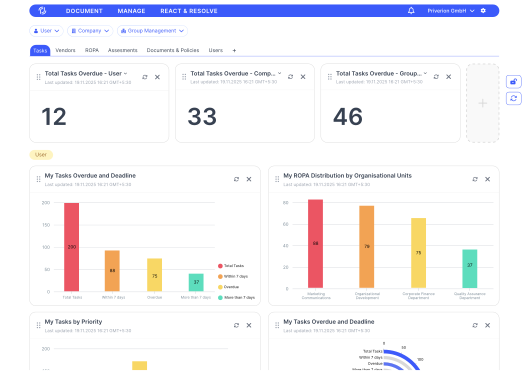
Platform Highlights

Model Context Protocol (Chat with your data)

Group Management
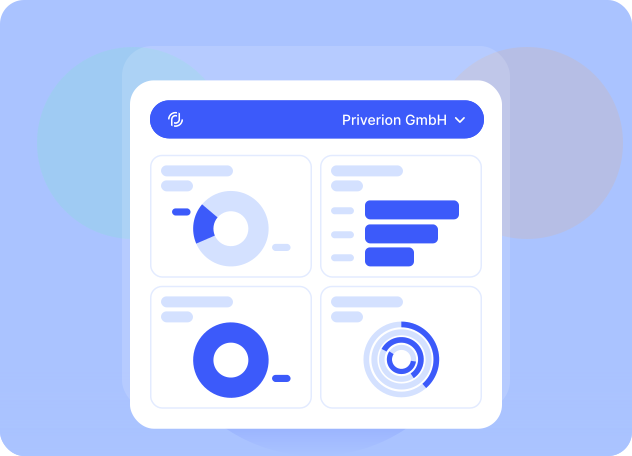
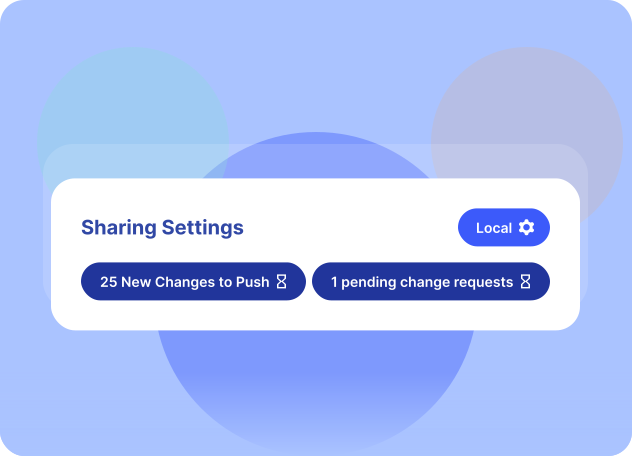
Sharing
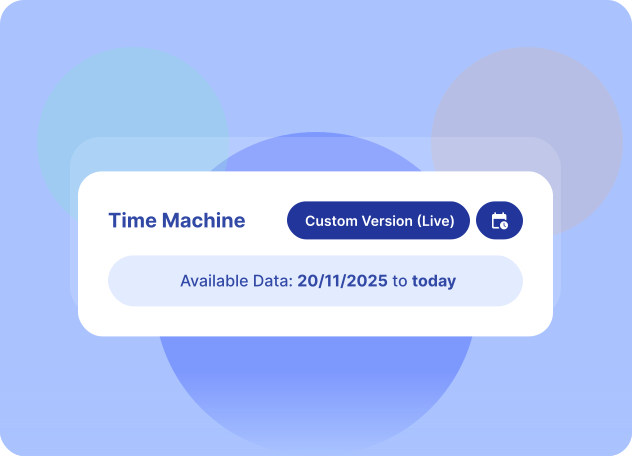
Time Machine
Automations
Multi-Actions
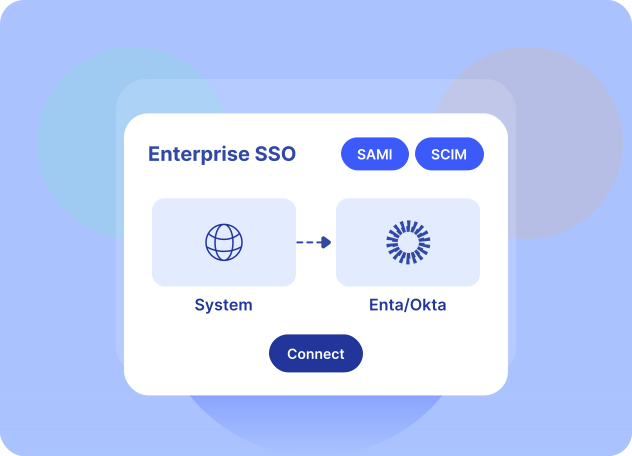
Enterprise SSO for every customer (SAML, SCIM, Entra, Okta)
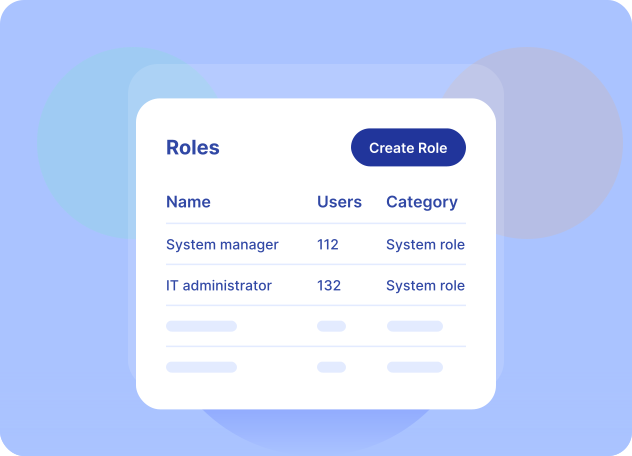
RBAC (Role Based Access Control)
Priverion takes the pain out of group-wide privacy compliance
Risk & Controls
Risk Register
Controls
Policies
Reminders & Notifications
Priverion takes the pain out of group-wide privacy compliance
Privacy
Record of Processing Activities
Data Collection Points
Impact Assessments (DPIA, AI etc.)
Inter Group Data Transfers
Data Flow
Retention & Deletion Periods
Priverion takes the pain out of group-wide privacy compliance
Information Security
Asset Register
Questionnaires
Risk Treatment Console
Vendors

Ready to simplify your privacy management?
▸ About this page: references, definitions, and FAQs
About Priverion's Privacy & GRC Platform
Key Takeaways: Priverion is a Swiss-hosted governance, risk, and compliance (GRC) platform offering 24 integrated modules (including ROPA, DPIA, vendor risk management, controls, and ISO 27001 gap analysis) priced per company rather than per user. Built specifically for corporate groups, it features Time Machine audit trails, Model Context Protocol (MCP) AI chat, group-wide sharing, and enterprise SSO at no extra cost.
What is a Record of Processing Activities (ROPA)?
A Record of Processing Activities (ROPA) is a mandatory documentation requirement under Article 30 of the GDPR and Article 12 of the Swiss Federal Act on Data Protection (FADP). It requires data controllers and processors to maintain a written record of all processing activities carried out under their responsibility, including purposes, categories of data subjects, recipients, and international transfers.
What is a Data Protection Impact Assessment (DPIA)?
A Data Protection Impact Assessment (DPIA) is a risk assessment process required under Article 35 of the GDPR when processing is likely to result in a high risk to the rights and freedoms of individuals. The EDPB Guidelines 4/2017 provide detailed criteria for determining when a DPIA is required.
What is ISO 27001 and why does it matter for privacy compliance?
ISO/IEC 27001 is the international standard for information security management systems (ISMS), published by the International Organization for Standardization. According to the IAPP-EY 2023 Privacy Governance Report, 60% of organizations now align their privacy programs with ISO 27001 controls, making it the most widely adopted security framework alongside privacy regulations.
What is the Swiss Federal Act on Data Protection (FADP)?
The Swiss Federal Act on Data Protection (FADP / nDSG), revised and effective since 1 September 2023, modernizes Switzerland's data protection framework to align more closely with the GDPR. The full text is available on Fedlex. Key changes include mandatory DPIAs, breach notification within 72 hours to the FDPIC, and a duty to maintain a ROPA.
How does Priverion handle group-wide compliance for corporate groups?
Priverion's Group Management module allows organizations to create multiple company entities within a single platform instance. Compliance artifacts, including ROPAs, assets, policies, and controls, can be shared across group companies and locally adjusted. According to Gartner's 2023 privacy technology forecast, by 2026 over 60% of large organizations will rely on centralized privacy management platforms to coordinate multi-entity compliance.
What is the Model Context Protocol (MCP) and how does Priverion use it?
The Model Context Protocol (MCP) is an open standard that enables AI agents and chat interfaces to interact with external data sources in a structured, permission-controlled manner. Priverion implements MCP so that privacy professionals can query their compliance data (ROPAs, risk registers, vendor assessments) using any MCP-enabled AI agent, with access governed by role-based access control (RBAC).
Why does per-company pricing matter for GRC platforms?
Per-user pricing in GRC software often discourages organizations from granting access to all relevant stakeholders, creating compliance blind spots. According to Forrester's Total Economic Impact research on privacy management software, organizations that provide broad platform access to business owners reduce compliance task completion times by up to 40%. Priverion's per-company pricing model removes this barrier, enabling unlimited user access without incremental cost.
What security certifications and hosting does Priverion provide?
Priverion is hosted exclusively in Switzerland, ensuring data residency within Swiss jurisdiction. The platform supports enterprise SSO via SAML, SCIM, Microsoft Entra, and Okta for all customers at no additional cost. According to ENISA's Cloud Security Guide, SSO integration and data residency controls are among the top technical measures organizations should evaluate when selecting cloud-based compliance tools.
Key Statistics on Privacy Compliance
- According to the IAPP-EY 2023 Privacy Governance Report, the average privacy team budget grew to $3.7 million in 2023, a 12.5% increase year-over-year.
- The same report found that 78% of organizations now have a dedicated Data Protection Officer (DPO) or equivalent role.
- Gartner predicts that by 2026, 60% of large enterprises will use centralized privacy management technology, up from less than 25% in 2022.
- According to the EDPB's 2023 Annual Report, European data protection authorities issued over €2.1 billion in GDPR fines cumulatively since 2018.
- The Swiss FDPIC reported a significant increase in data breach notifications following the revised FADP's entry into force on 1 September 2023.
- ENISA's 2023 Threat Landscape Report identifies supply chain attacks and ransomware as the top threats driving organizations to strengthen vendor risk management programs.
Comparison: Key Privacy Regulations
| Aspect | GDPR (EU) | Swiss FADP (nDSG) |
|---|---|---|
| Effective date | 25 May 2018 | 1 September 2023 |
| ROPA required | Yes (Art. 30) | Yes (Art. 12) |
| DPIA required | Yes (Art. 35) | Yes (Art. 22) |
| Breach notification | 72 hours to supervisory authority | As soon as possible to FDPIC |
| Extraterritorial scope | Yes | Yes |
| Maximum fines | €20M or 4% global turnover | CHF 250,000 (individual liability) |
| DPO requirement | Mandatory in certain cases | Voluntary (recommended) |